Absence of evidence is not evidence of absence.
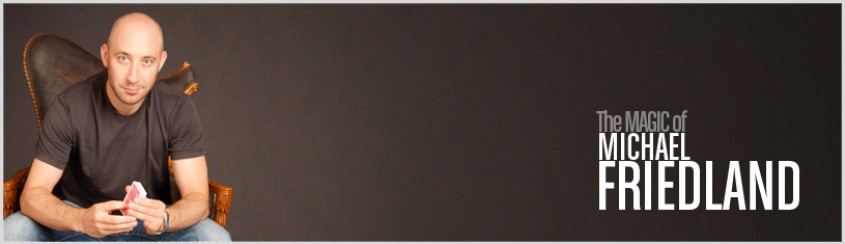
Jay from #Bigmouth, sleight of hand artist, subject of the the documentary film 'The Magic Life', businessman, philosopher, Jew.
Friday, November 13, 2020

Lessons on Life
A human being is a judgment machine, assessing at all times whether a thing is true or false. Whether you agree with that statement or not...proves the point.
Lessons on Life
Everyone thinks they are right in the present moment. Even when we acknowledge we were wrong, we're right about that.
Saturday, September 19, 2020
A Magical Public Service Announcement
If you are not already a student of technology, business, psychology, and spirituality, then go watch The Social Dilemma on Netflix, and keep reading this post.
The movie will put into focus how dangerous social media is, and the effects that it can have on our well being if we are not properly trained and prepared to counter its attacks. These attacks come at us all day and night, with constant notifications and sounds that draw our attention to our shiny screens. Each time the bell goes off, like Pavlov's dog, we mentally salivate for the forthcoming information and accompanying dopamine rush. Indeed, by constantly summoning our attention and focus with information, social media does not merely entertain; rather, it takes over our internal worlds and constructs our internal realities, which to each of us looks and feels indistinguishable from reality itself.
And the results are consistently, and manifestly bad; this is not to say that there aren't positive elements of social media and of information sharing more broadly, but to warn against a particular type of mental trap we are all prone to getting caught in.
Here's the first trap--see if it sounds familiar: Over the last number of years, people that have known me and loved me for my entire life suddenly think I'm crazy, or evil, or politically polarized. In real life, no one has ever thought of me as anything other than loving, level headed, extremely logical, and sensible. But online, it's a whole different story.
And people seem quite crazy to me as well, but for a different reason. When I'm online, I see loving, caring, warm people that I love deeply spending massive, and ever increasing amounts of their time concerned about the world. COVID hasn't helped. Each day, my Facebook feed is filled with friends posting articles that pique and spike their emotions to unhealthy levels. Many seem to be existing in a constant state of sanctimonious rage, seeing evil in others everywhere, and never in themselves, thus compelling them to spread their warnings against whatever the existential threat du jour may be.
This evil they find seems to exist nearly everywhere except, notably, in their actual realities. Their friends are good. Their neighbors are good. Their families are good. Even the people they know that they don't especially like or agree with are not that bad. But in the virtual reality of the internet, their focus is inexorably drawn to a perverse and pervasive evil that needles their minds and stokes strong emotions, and often times, rage.
We all see things from a perspective that is unique, forged out of our innate differences and life experiences. For me, as a magician since the age of 12 and a philosophy of mind and political science student at Tufts University, I have spent my life endeavoring to understand how the mind works to construct internal realities, which are themselves illusions. Philosophy asks the question of how things work, and magic takes those discoveries and puts them into practice and application, allowing magicians to deliberately construct specific illusions in the minds of others. The two pursuits dovetail nicely together, and form the foundation of how I see the world. Sharing this information is often received with resistance, because as my former professor Daniel Dennet quipped in one of this TED Talks, everyone thinks they are an expert on consciousness because each of us has our own personal experience with it. However, this first hand knowledge of our own consciousness does not make us experts in how it works. Rather, it makes us opinionated. Regardless, here are some of the lessons of the mind needed to adequately cope with modern life.
Lesson One: We See What We Focus On.
There is far too much data at any given moment in time to perceive all that is going on, so our brains develop tricks, habits, and shortcuts in order to derive a digestible and small enough version of reality to work with and function.
Magicians use this limited conscious capacity to curate the perception of reality by highlighting the moments they want seen, and editing or camouflaging those that they don’t want seen. This is classically referred to as misdirection.
But is it really misdirection, or is it direction, or simply, focus? More of the time, magicians create the illusion of magic by directing attention to the story they want perceived. In so doing, the method is inherently concealed, masked behind the bottleneck of consciousness.
As we hone this craft of magic, the philosophical among us eventually realize that this illusion of reality, created by focus, is not only true for our audiences, but for ourselves as well, and at all times. Meaning, our own realities are shaped by our focus, most of which is not deliberately chosen, but habitually formed without conscious, intentional, or benevolent curation. We believe in our own realities, without questioning what reality would look like if only our focus aimed elsewhere.
Here's an illustration:
When you look at the word "Brainstorm" your mind hears that word through the noise. And yet, with the identical audio track, if we focus on the words "Green Needle", we only hear that and are unable to detect the word "Brainstorm". More importantly, if you close your eyes and only listen to the audio track with no visual input at all, your mind will hear whichever word you focused on mentally.
This is an example of how our minds see and hear what we focus on. But we also see and hear things according to our priming. A classic example of this is the McGurk effect:
In this example, we expect to hear either "bah" or "fah", depending upon the visual clue we get from reading his lips. In fact, the sound is "bah" in both cases, but our minds trick us into hearing "fah" because that's what we'd expect to hear based on this lip movements.
Why do these demonstrations matter in a discussion of the dangers of social media? Because they show the power of our focus. Our focus is our reality, not in some magical way, but in a way that shows us that magic and reality are the same thing.
During a period such as now, when each of us has time on our hands to reflect, consider your habits, and inputs, and actions, and decide with care whether they are serving you. If the only thing your habits do is galvanize thought that doesn’t lead to action, or worse, makes you fearful, or spiteful, or sanctimonious, or angry, or enraged, or nihilistic, then are your thoughts, habits, and inputs really serving you? Will you look back at your life and be content knowing you spent so much of it thinking about subjects chosen for you by media and computer algorithms that don’t care about your well being at all? Or, would you have been better off choosing a focus for yourself, one that makes you feel good about yourself and helps you to overcome the ennui of existence.
Get started. The internet is overwhelmingly fake and increasingly populated by bots. They are programmed to keep us discontented.
Watch “the social dilemma”, right away. It puts into vivid relief how these technologies work, and why. My hope in writing this is to explain a bit about how you work, and how to use that information to beat the machines, and improve yourself in the ways only you can envision.
Understanding our own minds as the portal to our hearts gives us an opportunity to defend ourselves from the machines. It is not science fiction or something we need to worry about in the future, like the prescient possibility of fighting off terminators. This problem is now, and in truth, it has always been, something our more spiritual ancestors well understood.
No one will take care of your mental health for you. If you find yourself spending a lot of time reading and posting articles that upset you, or mistrusting the people you love the most, understand that that is their design. Ask yourself if you were designed, or created, or otherwise meant to suffer? If you believe that you were not, then see if you can find an alternate, positive explanation of reality, one that does not negate empirical facts, but that has a more uplifting theme. Curate your own inner world. Find the good. If you don’t habituate this curation, others will do it for you, and with no regard for your well being.
Best of luck, and for those you celebrating, Shana Tova.
Michael Friedland
September 19, 2020
Sunday, June 7, 2020
8 Must Wait

Many people I've spoken with regarding the recent rioting and protests have agreed that concrete goals and asks must be articulated in order to create meaningful progress in race relations, especially with respect to police abuse of minorities. Most notably, this sentiment was echoed by President Obama; it is not reasonable or productive, he explained, to decry racism without asking for specific changes to be made. This is exactly correct.
To that end, I was sent the following "asks" that are meant to be considered as reasonable and readily actionable. Entitled "8 Can't Wait", it has received some play in the media and is being circulated around Hollywood and the internet.
Like most progressive initiatives, it comes from the right place with its intentions: that is, to minimize the risk of harm or death to innocents at the hands of police. A good goal.
But like many progressive initiatives, the recommended changes are short sighted, and fly in the face of conservative wisdom that examines multi-dimensional trade-offs before making changes in order to preserve (or conserve) that which is good. In other words, before making policy changes, second and third order effects that are not immediately obvious must be considered. As the wise old adage goes, "never bring in a lion to chase out a lamb."
This means that before making a change, it is prudent to make sure the change being made is small, targeted, and that it doesn't cause more undesirable outcomes than the problem itself causes. The baseline assumption of a conservative worldview is that smart people, with good intentions, common goals, and differing perspectives, through rigorous processes over large periods of time, have created the world as it is now for a reason. And, while this world may be imperfect, deeply flawed even, changes should be made with extreme caution to prevent negative externalities.
Thus, with the above considerations in mind, let's examine whether these 8 really can't wait:
1. No choke holds.
No one wants to see another innocent victim choked to death. The image of George Floyd was horrible, so it is an understandable reflexive reaction to want choke holds banned. If chokes can kill, and kill innocent people no less, then chokes are bad, and we should ban them. So the progressive wisdom goes.
But in reality, no one wants chokes used to kill innocent suspects or even suspected criminals. Rather, it is simply that chokes are the safest and surest way for a smaller person to disable a larger person without weapons. Some cops are small, while some criminals and suspects are violent and big. As is known throughout all of martial arts and defense forces, chokes are among the most effective methods for a small person to defend against a larger one, and they are very safe. So safe, in fact, that they are allowed in even in sporting competitions. So, to the progressives advocating for 8 Can't Wait, chokes should be allowed in sporting competitions where there are rules, but not allowed in real life fights to the death where no rules exist. This does not make sense.
The problem with the choke on George Floyd was that, from what we know, it never should have been administered in the first place, and then to make matters worse, it was held for some 8-9 minutes, long after Floyd was no longer conscious. But banning chokes from police is not the remedy. A police cannot have one hand tied behind his or her back with "rules" while the person they fight has no rules. Such a suggestion is suicidal, like many of those found on the demand list.
Further, a ban is not a real ask. The ask is the thing that replaces the thing being banned. A ban is a "not" ask. What should cops do instead? Punch? Kick? Pepper spray? Taze? Stab? We need to know the alternative that is being proposed to weigh against the current option so that pros, cons, and trade-offs can be evaluated from one option to the next. So, if chokes are banned, what will replace them, and will that replacement be better or worse, and in what ways?
In sum, with respect to ask #1, it makes cops less safe and is a non-starter. And for those worried about police brutality, it's better to get choked and made unconscious than it is to get hit anywhere on the body with a billy club. No comparison. One wakes up from a choke no worse for the wear, whereas a billy club strike is incredibly painful and damaging.
2. Require de-escalation:
The demand or requirement to de-escalate is non-specific, thus not helpful and again, potentially dangerous to police.
Isn't it better to use the standard of 'minimal possible force required', rather than requiring de-escalation? Of course it is, and this is the standard already.
Isn't it better to use the standard of 'minimal possible force required', rather than requiring de-escalation? Of course it is, and this is the standard already.
Why is the minimal possible force a better standard? Because the worst possible preparation for a violent encounter of the type cops often find themselves in is the unwillingness to use the required force. Getting into a fight with someone that is willing to hurt you more than you are willing to hurt them is an untenable and terrible disadvantage. Instead, the moral position is that if you are on the side of right, then fight with that knowledge and with the fortitude to win, and to do so without apology.
3. Require warning before shooting:
This one is rich. I suppose that looks something like this:
"Mr. Suspect with a gun aimed at my face trying to evade punishment at all costs...this is the police...please don't shoot me while I give you the following verbal warning."
"Mr. Suspect with a gun aimed at my face trying to evade punishment at all costs...this is the police...please don't shoot me while I give you the following verbal warning."
Res ipsa loquitur. The lunacy of this recommended change speaks for itself.
Hesitation will get you killed. The better idea is that cops should be trained enough that the instinct of whether to shoot or not is properly honed. But with a verbal warning requirement, a criminal could, and thus would, pull a gun on a cop and squeeze the trigger before the cop has time to give the required verbal soliloquy.
This will never happen. Truly, God forbid. It is a method for criminals to kill cops wholesale by giving them a categorical advantage on speed to the trigger.
4. Exhaust all alternatives before shooting.
All alternatives? How many are there and who determines the number of alternatives?
This standard is far to vague, because cops are only half of the altercation equation; the other half is the suspect or criminal. If the criminal opts to use violence as option one, have all alternatives been exhausted?
Once again, the current policy of 'use the minimal amount of force required' is a far better categorical imperative.
This standard is far to vague, because cops are only half of the altercation equation; the other half is the suspect or criminal. If the criminal opts to use violence as option one, have all alternatives been exhausted?
Once again, the current policy of 'use the minimal amount of force required' is a far better categorical imperative.
5. Duty to intervene:
I am not sure what this means. Feel free to write me if you know!
6. Ban shooting at moving vehicles:
As with all things categorical, we need to examine if there are any exceptions, and we quickly find that there are:
What if a cop sees a terrorist driving a car into a building and can stop the car by shooting the driver or the vehicle's tires? With this new demanded requirement, instead of acting instinctively to stop such a violent act, the cop's mind would be slowed down and over burdened wondering if all the required de-escalation check boxes had been fulfilled. "Should i shoot? I forgot to give a verbal warning and I'm not allowed to shoot moving vehicles." This does not serve our common interest.
What if a cop sees a terrorist driving a car into a building and can stop the car by shooting the driver or the vehicle's tires? With this new demanded requirement, instead of acting instinctively to stop such a violent act, the cop's mind would be slowed down and over burdened wondering if all the required de-escalation check boxes had been fulfilled. "Should i shoot? I forgot to give a verbal warning and I'm not allowed to shoot moving vehicles." This does not serve our common interest.
A categorical ban leaves out the possibility of judgment. That is terrible, even if some judgment calls unfortunately lead to sub-optimal, even tragic outcomes.
7. Establish use of force continuum.
What is to be gained by this announcement? Suspects should have a road map of how the police will escalate violence in advance? This is another suggestion that is unnecessary. If we all know in advance that the police will use violence as required, that's all the road map we need to avoid harm unless the officer acts against the rules by using more force than is necessary or required.
But more rules doesn't solve that problem.
But more rules doesn't solve that problem.
8. Report all force:
This could create an overwhelming amount of paperwork that would hamstring our cops actual policing capacity. Nearly everything is on video these days anyway between car cams, body cams, ATM machines, security cameras, smart phones, witnesses, and more. Another recording mechanism seems unnecessary and superfluous. It doesn't create a huge problem, but it doesn't solve one either.
Conclusions:
The above is an examination of first order consequences primarily. However, making large changes to a system causes ripple effects--second and third order consequences that also must be considered. Namely, and specific to this demand list, the proposed changes will result in: 1. More dead cops, 2 More living crooks that killed those cops, 3. A structural disadvantage that will prevent people from becoming cops, and 4. (much) more crime, particularly, violent crime. Those are the second order consequences.
I wish it stopped there. But it likely will not. The third order consequences are far worse, because baked into these left leaning composite recipes is far left ideological ingredients. The second order consequences above would radically transform society such that the strong could have their way with the weak, with no police force available to protect the weak. Indeed, these policy suggestions would endanger us all, and only make sense as a first step toward accomplishing a larger desire to dismantle society as we know it. What seem like small first steps toward curbing police brutality will end with radical calls to disband the police entirely. We are already seeing #defundpolice trending. The writing is on the wall.
Accordingly, these 8 can, and must, wait. Cops need to be more capable of, adept with, and prepared for violence in order to have the confrontational edge needed to effectively police. These are brave civil servants taking on the risky job of protecting the public from whatever dangers they may encounter. Their lives matter, too.
Monday, November 11, 2019
The KING IS (NEARLY) DEAD
Last night I went to the Lakers vs Raptors game at the staples center. I admit that this was the first Laker game I've attended in the Lebron era, and am sad to report that it may have been too late.
The Lebron I saw last night was not the best player on his team, let alone in the league. His offense was nothing special: a few nice hard drives to the hole, but far short of spectacular. His outside shooting was terrible and out of rhythm.
But his offense wasn't the issue, it was on the defensive end where things looked off. He made a few nice stops and had one of his signature come-from-behind blocks, but this was overshadowed by his overall lethargy and lack of activity. He didn't close out quickly on shooters, have his hands dipping into passing lanes, or seem active. Despite having a triple double, his impact seemed net negative, and this turned out to be true from his real plus minus of negative 6 for the game. Maybe the Raptors are better than I expected, even without Kawhi. Time will tell.
It's normal to see players get larger over time. Lebron looks huge, not quite like the same guy that once caught a bad lob pass nearly 13 feet off the ground. He looked slow, and unwilling to take contact on the defensive end. If there was a 50:50 ball, it's odds were more like 10:90 in the wrong direction.
Lakers needs a real point guard, or this experiment is going to fail. And Lebron needs to guard bigger, slower players if they are to be successful on the defensive end.
I am sad I never got to see Lebron play, live, in his prime. But I saw enough last night to know the Lakers need to be honest with themselves if they hope to salvage a deep playoff or championship run.
The Lebron I saw last night was not the best player on his team, let alone in the league. His offense was nothing special: a few nice hard drives to the hole, but far short of spectacular. His outside shooting was terrible and out of rhythm.
But his offense wasn't the issue, it was on the defensive end where things looked off. He made a few nice stops and had one of his signature come-from-behind blocks, but this was overshadowed by his overall lethargy and lack of activity. He didn't close out quickly on shooters, have his hands dipping into passing lanes, or seem active. Despite having a triple double, his impact seemed net negative, and this turned out to be true from his real plus minus of negative 6 for the game. Maybe the Raptors are better than I expected, even without Kawhi. Time will tell.
It's normal to see players get larger over time. Lebron looks huge, not quite like the same guy that once caught a bad lob pass nearly 13 feet off the ground. He looked slow, and unwilling to take contact on the defensive end. If there was a 50:50 ball, it's odds were more like 10:90 in the wrong direction.
Lakers needs a real point guard, or this experiment is going to fail. And Lebron needs to guard bigger, slower players if they are to be successful on the defensive end.
I am sad I never got to see Lebron play, live, in his prime. But I saw enough last night to know the Lakers need to be honest with themselves if they hope to salvage a deep playoff or championship run.
Subscribe to:
Posts (Atom)