Everyone thinks they are right in the present moment. Even when we acknowledge we were wrong, we're right about that.
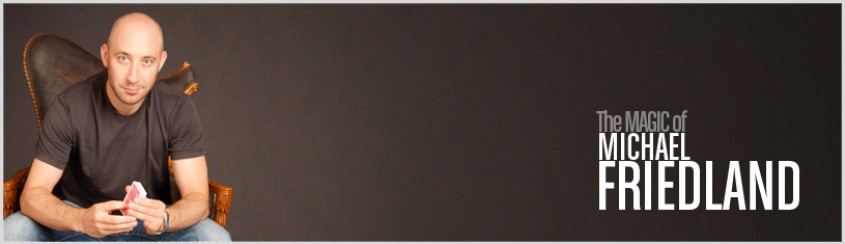
Jay from #Bigmouth, sleight of hand artist, subject of the the documentary film 'The Magic Life', businessman, philosopher, Jew.
Friday, November 13, 2020

Saturday, September 19, 2020
A Magical Public Service Announcement
If you are not already a student of technology, business, psychology, and spirituality, then go watch The Social Dilemma on Netflix, and keep reading this post.
The movie will put into focus how dangerous social media is, and the effects that it can have on our well being if we are not properly trained and prepared to counter its attacks. These attacks come at us all day and night, with constant notifications and sounds that draw our attention to our shiny screens. Each time the bell goes off, like Pavlov's dog, we mentally salivate for the forthcoming information and accompanying dopamine rush. Indeed, by constantly summoning our attention and focus with information, social media does not merely entertain; rather, it takes over our internal worlds and constructs our internal realities, which to each of us looks and feels indistinguishable from reality itself.
And the results are consistently, and manifestly bad; this is not to say that there aren't positive elements of social media and of information sharing more broadly, but to warn against a particular type of mental trap we are all prone to getting caught in.
Here's the first trap--see if it sounds familiar: Over the last number of years, people that have known me and loved me for my entire life suddenly think I'm crazy, or evil, or politically polarized. In real life, no one has ever thought of me as anything other than loving, level headed, extremely logical, and sensible. But online, it's a whole different story.
And people seem quite crazy to me as well, but for a different reason. When I'm online, I see loving, caring, warm people that I love deeply spending massive, and ever increasing amounts of their time concerned about the world. COVID hasn't helped. Each day, my Facebook feed is filled with friends posting articles that pique and spike their emotions to unhealthy levels. Many seem to be existing in a constant state of sanctimonious rage, seeing evil in others everywhere, and never in themselves, thus compelling them to spread their warnings against whatever the existential threat du jour may be.
This evil they find seems to exist nearly everywhere except, notably, in their actual realities. Their friends are good. Their neighbors are good. Their families are good. Even the people they know that they don't especially like or agree with are not that bad. But in the virtual reality of the internet, their focus is inexorably drawn to a perverse and pervasive evil that needles their minds and stokes strong emotions, and often times, rage.
We all see things from a perspective that is unique, forged out of our innate differences and life experiences. For me, as a magician since the age of 12 and a philosophy of mind and political science student at Tufts University, I have spent my life endeavoring to understand how the mind works to construct internal realities, which are themselves illusions. Philosophy asks the question of how things work, and magic takes those discoveries and puts them into practice and application, allowing magicians to deliberately construct specific illusions in the minds of others. The two pursuits dovetail nicely together, and form the foundation of how I see the world. Sharing this information is often received with resistance, because as my former professor Daniel Dennet quipped in one of this TED Talks, everyone thinks they are an expert on consciousness because each of us has our own personal experience with it. However, this first hand knowledge of our own consciousness does not make us experts in how it works. Rather, it makes us opinionated. Regardless, here are some of the lessons of the mind needed to adequately cope with modern life.
Lesson One: We See What We Focus On.
There is far too much data at any given moment in time to perceive all that is going on, so our brains develop tricks, habits, and shortcuts in order to derive a digestible and small enough version of reality to work with and function.
Magicians use this limited conscious capacity to curate the perception of reality by highlighting the moments they want seen, and editing or camouflaging those that they don’t want seen. This is classically referred to as misdirection.
But is it really misdirection, or is it direction, or simply, focus? More of the time, magicians create the illusion of magic by directing attention to the story they want perceived. In so doing, the method is inherently concealed, masked behind the bottleneck of consciousness.
As we hone this craft of magic, the philosophical among us eventually realize that this illusion of reality, created by focus, is not only true for our audiences, but for ourselves as well, and at all times. Meaning, our own realities are shaped by our focus, most of which is not deliberately chosen, but habitually formed without conscious, intentional, or benevolent curation. We believe in our own realities, without questioning what reality would look like if only our focus aimed elsewhere.
Here's an illustration:
When you look at the word "Brainstorm" your mind hears that word through the noise. And yet, with the identical audio track, if we focus on the words "Green Needle", we only hear that and are unable to detect the word "Brainstorm". More importantly, if you close your eyes and only listen to the audio track with no visual input at all, your mind will hear whichever word you focused on mentally.
This is an example of how our minds see and hear what we focus on. But we also see and hear things according to our priming. A classic example of this is the McGurk effect:
In this example, we expect to hear either "bah" or "fah", depending upon the visual clue we get from reading his lips. In fact, the sound is "bah" in both cases, but our minds trick us into hearing "fah" because that's what we'd expect to hear based on this lip movements.
Why do these demonstrations matter in a discussion of the dangers of social media? Because they show the power of our focus. Our focus is our reality, not in some magical way, but in a way that shows us that magic and reality are the same thing.
During a period such as now, when each of us has time on our hands to reflect, consider your habits, and inputs, and actions, and decide with care whether they are serving you. If the only thing your habits do is galvanize thought that doesn’t lead to action, or worse, makes you fearful, or spiteful, or sanctimonious, or angry, or enraged, or nihilistic, then are your thoughts, habits, and inputs really serving you? Will you look back at your life and be content knowing you spent so much of it thinking about subjects chosen for you by media and computer algorithms that don’t care about your well being at all? Or, would you have been better off choosing a focus for yourself, one that makes you feel good about yourself and helps you to overcome the ennui of existence.
Get started. The internet is overwhelmingly fake and increasingly populated by bots. They are programmed to keep us discontented.
Watch “the social dilemma”, right away. It puts into vivid relief how these technologies work, and why. My hope in writing this is to explain a bit about how you work, and how to use that information to beat the machines, and improve yourself in the ways only you can envision.
Understanding our own minds as the portal to our hearts gives us an opportunity to defend ourselves from the machines. It is not science fiction or something we need to worry about in the future, like the prescient possibility of fighting off terminators. This problem is now, and in truth, it has always been, something our more spiritual ancestors well understood.
No one will take care of your mental health for you. If you find yourself spending a lot of time reading and posting articles that upset you, or mistrusting the people you love the most, understand that that is their design. Ask yourself if you were designed, or created, or otherwise meant to suffer? If you believe that you were not, then see if you can find an alternate, positive explanation of reality, one that does not negate empirical facts, but that has a more uplifting theme. Curate your own inner world. Find the good. If you don’t habituate this curation, others will do it for you, and with no regard for your well being.
Best of luck, and for those you celebrating, Shana Tova.
Michael Friedland
September 19, 2020
Sunday, June 7, 2020
8 Must Wait

Many people I've spoken with regarding the recent rioting and protests have agreed that concrete goals and asks must be articulated in order to create meaningful progress in race relations, especially with respect to police abuse of minorities. Most notably, this sentiment was echoed by President Obama; it is not reasonable or productive, he explained, to decry racism without asking for specific changes to be made. This is exactly correct.
To that end, I was sent the following "asks" that are meant to be considered as reasonable and readily actionable. Entitled "8 Can't Wait", it has received some play in the media and is being circulated around Hollywood and the internet.
Like most progressive initiatives, it comes from the right place with its intentions: that is, to minimize the risk of harm or death to innocents at the hands of police. A good goal.
But like many progressive initiatives, the recommended changes are short sighted, and fly in the face of conservative wisdom that examines multi-dimensional trade-offs before making changes in order to preserve (or conserve) that which is good. In other words, before making policy changes, second and third order effects that are not immediately obvious must be considered. As the wise old adage goes, "never bring in a lion to chase out a lamb."
This means that before making a change, it is prudent to make sure the change being made is small, targeted, and that it doesn't cause more undesirable outcomes than the problem itself causes. The baseline assumption of a conservative worldview is that smart people, with good intentions, common goals, and differing perspectives, through rigorous processes over large periods of time, have created the world as it is now for a reason. And, while this world may be imperfect, deeply flawed even, changes should be made with extreme caution to prevent negative externalities.
Thus, with the above considerations in mind, let's examine whether these 8 really can't wait:
1. No choke holds.
No one wants to see another innocent victim choked to death. The image of George Floyd was horrible, so it is an understandable reflexive reaction to want choke holds banned. If chokes can kill, and kill innocent people no less, then chokes are bad, and we should ban them. So the progressive wisdom goes.
But in reality, no one wants chokes used to kill innocent suspects or even suspected criminals. Rather, it is simply that chokes are the safest and surest way for a smaller person to disable a larger person without weapons. Some cops are small, while some criminals and suspects are violent and big. As is known throughout all of martial arts and defense forces, chokes are among the most effective methods for a small person to defend against a larger one, and they are very safe. So safe, in fact, that they are allowed in even in sporting competitions. So, to the progressives advocating for 8 Can't Wait, chokes should be allowed in sporting competitions where there are rules, but not allowed in real life fights to the death where no rules exist. This does not make sense.
The problem with the choke on George Floyd was that, from what we know, it never should have been administered in the first place, and then to make matters worse, it was held for some 8-9 minutes, long after Floyd was no longer conscious. But banning chokes from police is not the remedy. A police cannot have one hand tied behind his or her back with "rules" while the person they fight has no rules. Such a suggestion is suicidal, like many of those found on the demand list.
Further, a ban is not a real ask. The ask is the thing that replaces the thing being banned. A ban is a "not" ask. What should cops do instead? Punch? Kick? Pepper spray? Taze? Stab? We need to know the alternative that is being proposed to weigh against the current option so that pros, cons, and trade-offs can be evaluated from one option to the next. So, if chokes are banned, what will replace them, and will that replacement be better or worse, and in what ways?
In sum, with respect to ask #1, it makes cops less safe and is a non-starter. And for those worried about police brutality, it's better to get choked and made unconscious than it is to get hit anywhere on the body with a billy club. No comparison. One wakes up from a choke no worse for the wear, whereas a billy club strike is incredibly painful and damaging.
2. Require de-escalation:
The demand or requirement to de-escalate is non-specific, thus not helpful and again, potentially dangerous to police.
Isn't it better to use the standard of 'minimal possible force required', rather than requiring de-escalation? Of course it is, and this is the standard already.
Isn't it better to use the standard of 'minimal possible force required', rather than requiring de-escalation? Of course it is, and this is the standard already.
Why is the minimal possible force a better standard? Because the worst possible preparation for a violent encounter of the type cops often find themselves in is the unwillingness to use the required force. Getting into a fight with someone that is willing to hurt you more than you are willing to hurt them is an untenable and terrible disadvantage. Instead, the moral position is that if you are on the side of right, then fight with that knowledge and with the fortitude to win, and to do so without apology.
3. Require warning before shooting:
This one is rich. I suppose that looks something like this:
"Mr. Suspect with a gun aimed at my face trying to evade punishment at all costs...this is the police...please don't shoot me while I give you the following verbal warning."
"Mr. Suspect with a gun aimed at my face trying to evade punishment at all costs...this is the police...please don't shoot me while I give you the following verbal warning."
Res ipsa loquitur. The lunacy of this recommended change speaks for itself.
Hesitation will get you killed. The better idea is that cops should be trained enough that the instinct of whether to shoot or not is properly honed. But with a verbal warning requirement, a criminal could, and thus would, pull a gun on a cop and squeeze the trigger before the cop has time to give the required verbal soliloquy.
This will never happen. Truly, God forbid. It is a method for criminals to kill cops wholesale by giving them a categorical advantage on speed to the trigger.
4. Exhaust all alternatives before shooting.
All alternatives? How many are there and who determines the number of alternatives?
This standard is far to vague, because cops are only half of the altercation equation; the other half is the suspect or criminal. If the criminal opts to use violence as option one, have all alternatives been exhausted?
Once again, the current policy of 'use the minimal amount of force required' is a far better categorical imperative.
This standard is far to vague, because cops are only half of the altercation equation; the other half is the suspect or criminal. If the criminal opts to use violence as option one, have all alternatives been exhausted?
Once again, the current policy of 'use the minimal amount of force required' is a far better categorical imperative.
5. Duty to intervene:
I am not sure what this means. Feel free to write me if you know!
6. Ban shooting at moving vehicles:
As with all things categorical, we need to examine if there are any exceptions, and we quickly find that there are:
What if a cop sees a terrorist driving a car into a building and can stop the car by shooting the driver or the vehicle's tires? With this new demanded requirement, instead of acting instinctively to stop such a violent act, the cop's mind would be slowed down and over burdened wondering if all the required de-escalation check boxes had been fulfilled. "Should i shoot? I forgot to give a verbal warning and I'm not allowed to shoot moving vehicles." This does not serve our common interest.
What if a cop sees a terrorist driving a car into a building and can stop the car by shooting the driver or the vehicle's tires? With this new demanded requirement, instead of acting instinctively to stop such a violent act, the cop's mind would be slowed down and over burdened wondering if all the required de-escalation check boxes had been fulfilled. "Should i shoot? I forgot to give a verbal warning and I'm not allowed to shoot moving vehicles." This does not serve our common interest.
A categorical ban leaves out the possibility of judgment. That is terrible, even if some judgment calls unfortunately lead to sub-optimal, even tragic outcomes.
7. Establish use of force continuum.
What is to be gained by this announcement? Suspects should have a road map of how the police will escalate violence in advance? This is another suggestion that is unnecessary. If we all know in advance that the police will use violence as required, that's all the road map we need to avoid harm unless the officer acts against the rules by using more force than is necessary or required.
But more rules doesn't solve that problem.
But more rules doesn't solve that problem.
8. Report all force:
This could create an overwhelming amount of paperwork that would hamstring our cops actual policing capacity. Nearly everything is on video these days anyway between car cams, body cams, ATM machines, security cameras, smart phones, witnesses, and more. Another recording mechanism seems unnecessary and superfluous. It doesn't create a huge problem, but it doesn't solve one either.
Conclusions:
The above is an examination of first order consequences primarily. However, making large changes to a system causes ripple effects--second and third order consequences that also must be considered. Namely, and specific to this demand list, the proposed changes will result in: 1. More dead cops, 2 More living crooks that killed those cops, 3. A structural disadvantage that will prevent people from becoming cops, and 4. (much) more crime, particularly, violent crime. Those are the second order consequences.
I wish it stopped there. But it likely will not. The third order consequences are far worse, because baked into these left leaning composite recipes is far left ideological ingredients. The second order consequences above would radically transform society such that the strong could have their way with the weak, with no police force available to protect the weak. Indeed, these policy suggestions would endanger us all, and only make sense as a first step toward accomplishing a larger desire to dismantle society as we know it. What seem like small first steps toward curbing police brutality will end with radical calls to disband the police entirely. We are already seeing #defundpolice trending. The writing is on the wall.
Accordingly, these 8 can, and must, wait. Cops need to be more capable of, adept with, and prepared for violence in order to have the confrontational edge needed to effectively police. These are brave civil servants taking on the risky job of protecting the public from whatever dangers they may encounter. Their lives matter, too.
Monday, November 11, 2019
The KING IS (NEARLY) DEAD
Last night I went to the Lakers vs Raptors game at the staples center. I admit that this was the first Laker game I've attended in the Lebron era, and am sad to report that it may have been too late.
The Lebron I saw last night was not the best player on his team, let alone in the league. His offense was nothing special: a few nice hard drives to the hole, but far short of spectacular. His outside shooting was terrible and out of rhythm.
But his offense wasn't the issue, it was on the defensive end where things looked off. He made a few nice stops and had one of his signature come-from-behind blocks, but this was overshadowed by his overall lethargy and lack of activity. He didn't close out quickly on shooters, have his hands dipping into passing lanes, or seem active. Despite having a triple double, his impact seemed net negative, and this turned out to be true from his real plus minus of negative 6 for the game. Maybe the Raptors are better than I expected, even without Kawhi. Time will tell.
It's normal to see players get larger over time. Lebron looks huge, not quite like the same guy that once caught a bad lob pass nearly 13 feet off the ground. He looked slow, and unwilling to take contact on the defensive end. If there was a 50:50 ball, it's odds were more like 10:90 in the wrong direction.
Lakers needs a real point guard, or this experiment is going to fail. And Lebron needs to guard bigger, slower players if they are to be successful on the defensive end.
I am sad I never got to see Lebron play, live, in his prime. But I saw enough last night to know the Lakers need to be honest with themselves if they hope to salvage a deep playoff or championship run.
The Lebron I saw last night was not the best player on his team, let alone in the league. His offense was nothing special: a few nice hard drives to the hole, but far short of spectacular. His outside shooting was terrible and out of rhythm.
But his offense wasn't the issue, it was on the defensive end where things looked off. He made a few nice stops and had one of his signature come-from-behind blocks, but this was overshadowed by his overall lethargy and lack of activity. He didn't close out quickly on shooters, have his hands dipping into passing lanes, or seem active. Despite having a triple double, his impact seemed net negative, and this turned out to be true from his real plus minus of negative 6 for the game. Maybe the Raptors are better than I expected, even without Kawhi. Time will tell.
It's normal to see players get larger over time. Lebron looks huge, not quite like the same guy that once caught a bad lob pass nearly 13 feet off the ground. He looked slow, and unwilling to take contact on the defensive end. If there was a 50:50 ball, it's odds were more like 10:90 in the wrong direction.
Lakers needs a real point guard, or this experiment is going to fail. And Lebron needs to guard bigger, slower players if they are to be successful on the defensive end.
I am sad I never got to see Lebron play, live, in his prime. But I saw enough last night to know the Lakers need to be honest with themselves if they hope to salvage a deep playoff or championship run.
Monday, March 12, 2018
#Bigmouth
Bigmouth, the new animated series on Netflix, is just terrific. Really--many moments of pure hilarity, so I can recommend fully if you're in need of some down time and laughs. I anticipate the show will be a big hit, and certainly hope so!
For me, it's been incredibly fun to watch, since the show was created by two of my oldest childhood friends, Andrew Goldberg & Nick Kroll, and it features many memories from our childhood together.
For me, it's been incredibly fun to watch, since the show was created by two of my oldest childhood friends, Andrew Goldberg & Nick Kroll, and it features many memories from our childhood together.
Andrew & Nick told me about Bigmouth about a year and a half ago when the show was first green-lighted, so I've eagerly anticipated its arrival ever since. I worried a bit about whether or how I might be depicted in the show (the character of Jay, which is my oldest brother's name, is loosely based on me and another classmate), but my desire to see their comedic rendition of our childhood certainly trumped any concerns.
So when the show was released a few weeks ago, I hunkered down for two straight nights to devour it, and I loved it and was impressed with what they created. Among and between the moments of laugh-out-loud, shocking antics, are moments of pure tenderness and sweetness, informed by the common experiences that stem from the roller coaster that is puberty. It is this common experience that will make the show successful--since we've all been through it. Viewers will see themselves in the stories, and relate.
Andrew & Nick, along with Eytan Oren and Jon Eger, were classmates of mine, and my best friends growing up. All these years later, they remain a part of me--my past, my present, my thoughts, my heart. Watching Bigmouth made me want to tell a bit about their stories and role in my life.
Nick Kroll
Nick was really...amazing as a kid. Incredibly lovable and charismatic. As the show rightly depicts, he was very small in stature, but also adorable, confident, funny, and adventurous. He did not hit puberty until much later than the rest of us. In fact, when we all went our separate ways after 8th grade, I don't know whether Nick had hit puberty by then or not. By contrast, Andrew hit puberty at around 8 years old, and was shaving shortly thereafter. By the time Nick started shaving, Andrew had already started losing his hair!
Nick was tons of fun as a kid. In his bedroom were two basketball hoops that we used to play one-on-one death matches on, and he was a force to be reckoned with despite being much smaller than I was. And he was pretty tough on a real basketball court too. He made huge impacts on the games, running around the court, disrupting passing lanes, getting steals, and pulling off miraculous, gutty plays. I recently spoke with our old Coach, Steve, who is also caricatured in the show, and he confirmed that Nick, Eytan, and I were his best players, with a slight emphasis on me (thank god!).
Nick definitely had a special quality--he was fearless in all things--not just in sports, but socially as well. He loved being in the center of everything, and felt comfortable there. I remember on one school trip, he was sitting in the back of the bus telling jokes and singing dirty nursery rhymes. The other kids and I ate it up, and it was fun.
Nick definitely had a special quality--he was fearless in all things--not just in sports, but socially as well. He loved being in the center of everything, and felt comfortable there. I remember on one school trip, he was sitting in the back of the bus telling jokes and singing dirty nursery rhymes. The other kids and I ate it up, and it was fun.
Those bus rides also foretold of his comedic bent. On one trip, we were headed to an old age home in the Bronx, and on the way there the bus passed a graveyard. A ten-year old Nick saw the gravestones poking out from the ground and yelled out, "We must be getting close!" He was always clever and funny. Years after that, we were in Oklahoma! together (for a second time), and when another actor messed up a line, Nick rolled with it, quite hilariously. Sadly, I don't recall the details, but it was funny stuff, and an early sign of his improv abilities.
About 8 years ago, when I moved to LA, Nick and I had lunch, and he told me about his single minded pursuit of his career. It was obvious to me he would achieve whatever he set out to accomplish. That's who Nick is--an unrelenting go-getter. I can only imagine what it's taken for him to achieve what he has. Enormous energy, drive, ingenuity, talent, and passion (and possibly a covert deal with the devil?). In short, the Nick of today is a magnification of the Nick(y) we grew up with. It's fun to see how he has blossomed.
I will always love and admire him. He's very special and his career reflects that.
Andrew Goldberg
Though less famous than Nick, Andrew too is a force to be reckoned with. As an only child, Andrew spent years in his room and imagination, doing... god only knows what. But in those hours, he evolved into something very rare, with his unrivaled combination of imagination and incredible brain power.
Andrew is, to my mind, a certifiable genius. I'm not sure it's a matter of debate or subjectivity actually.
As a kid, he would receive baseball card sets as a gift for holidays and birthdays. Each set had hundreds of cards, and each year had multiple sets, resulting in thousands of unique cards released for collecting every year. I collected baseball cards too, but I would buy little packs with 10 cards or so. As a result, I cherished each card, and when I was lucky enough to get a great player's card, I would frame it in a little glass case to make sure it stayed well protected. Each card was so rare and valuable to me that I wanted to savor each one by treating it with care and respect.
By contrast, Andrew was so inundated with card sets each year, that he kept them in the only containers large enough to hold them: huge GARBAGE bins. In his bedroom were multiple bins of cards, strewn all over the place in no order. For Andrew, the lack of organization didn't matter though, because he never needed to find the cards after viewing them just once...
...because he had already committed them to memory.
Much like Rainman's, Andrew's brain is a supercomputer of memory and processing power. He can do things that truly look like magic. For instance, you can reach into any of the garbage bins and pull out any of the the tens of thousands of cards. If you show Andrew an area of the card no greater than 1 square centimeter, he can extrapolate which card it is, and then proceed to tell you all of the statistics on the back of the card. Tens of thousands of cards with hundreds of thousands of stats, all available to him as simple recall. In fact, he tells me, he can still do it 30 years later. He is just not normal. Here's a clip of it made a few years ago:
After elementary school, Andrew and I continued on to White Plains High School together, where we remained close. At a certain point, his brilliance hit fifth gear. He would score perfectly on almost all standardized tests, earning him a spot at Columbia where he graduated with a 4.0 GPA, Magna Cum Laude. After that, he went to film school in California, and then got a job writing for Family Guy after a few shorter stints with other shows. Like Nick, his career has been blessed. I know tons of writers that constantly have to look for work, and it's a grind. Andrew, for all the time he's been here, has remained 100% employed at all times, and in fact, does side projects in addition to his formal "jobs". It's a level of intellectual production that can only come from the most fertile of brains.
Andrew as a kid--he was just a lot of fun. He loved baseball. He loved comedy. He was hilarious. He was eccentric. He was...terrific. In high school, he and our dear friend Dan Isenberg started a cable television show called Prime Time with Dan & Andrew. Andrew wrote many/most of the skits, and they were hilarious. The show gained a following, and Dan & Andrew were like celebrities within the class. Dan, another terrific talent, became a rapper, and we are all still in touch to this day. Here's one of my favorite clips from their show, a skit called "Name that STD!":
In Bigmouth, Andrew's childhood household is hilariously depicted--because it really was a crazy place. I remember one time touching one of the walls to his staircase, an offense so egregious that his father threatened to make me repaint the whole house! In the final Episode of Bigmouth, Season I, there's a reference to Andrew's dad going crazy over drywall, and it's pretty hilarious.
It was a crazy place (though my house had it's own craziness!)--but a terrific breeding ground for comedy. As the saying goes, comedy=tragedy+time. Bigmouth capitalizes on this...#Bigtime. Many of the funniest moments were not so funny at the time, but are hilarious in retrospect.
Eytan Oren
Eytan Oren was a big part of our childhood, despite the fact that no character in Bigmouth is clearly based on him. That said, his impact on all of us was undeniable.
When we were very young, Eytan used to watch MTV pretty much around the clock. He wanted to be a musician, maybe even a rock star, and he practiced diligently to improve his chops and achieve his dreams. Today, he plays numerous instruments, sings fabulously, and has performed in many, many bands over the years. A number of years ago, one of his bands released a music video called "Everything Changes" that went viral. Here it is!
As a kid, Eytan was also a terrific athlete and student. Come to think of it, I can't think of anything he wasn't good at. My mother loved his gorgeous eyelashes, and today he remains quite blessed with an impressive head of hair.
He's just a great guy. Brilliant in many ways himself. And, although we don't speak often, we remain close. I know that on my end, I will always love him.
Jon Eger
Jon has made no attempt to lead a public life. And I will respect that here and keep it brief.
Jon comes from a family where both parents are psychologists, and he himself is a practicing psychologist in NYC today. He is a very solid person--incredibly capable and talented at abstraction. He is a great listener. He is empathetic and compassionate, while remaining conceptually honest. He is exactly the type of doctor you'd hope to find when the need arises.
As kids, Jon and I were very close, and we were into "guy" stuff. Our version of fantasy play--we shot guns, wrestled, hiked, played baseball with his dad, and communicated with each other nightly using our high powered walkie-talkies.
Most noteworthy--Jon got me hooked on magic. He knew a few great tricks (coin matrix, for instance) that piqued my interest in magic, and we spent much of our adolescence and early high school years practicing and learning magic. On Saturdays, he and I would take the train into Manhattan and go to Tannen's Magic Shop & Rubens Deli. Then during the week, we would practice what we learned from the weekend, only to return the following weekend to come back for more.
Most noteworthy--Jon got me hooked on magic. He knew a few great tricks (coin matrix, for instance) that piqued my interest in magic, and we spent much of our adolescence and early high school years practicing and learning magic. On Saturdays, he and I would take the train into Manhattan and go to Tannen's Magic Shop & Rubens Deli. Then during the week, we would practice what we learned from the weekend, only to return the following weekend to come back for more.
Jon and I remain very close to this day. So close, in fact, that he called just moments ago while I was writing this paragraph. He will always be a rock for me, someone who will be there through the ups and downs that life presents. And I will be there for him. Always. I love him.
To my friends Jon, Eytan, Nick, & Andrew--l'chaim my friends. You're in my heart, always.
"I never had any friends later on like the ones I had when I was twelve. Jesus, does anyone?"-Quote from "Stand By Me"
Friday, March 9, 2018
Deadpool, meet Kryptonite
I just returned from seeing the movie "Red Sparrow" at the Grove. I have no idea what it was about. But that's not the point of this post. Before the movie began there was a preview--a sequel to "Deadpool". I loved Deadpool, and so at first I was elated to see that a sequel was being made. But a few moments later, my enthusiasm subsided.
Like many boys, I grew up loving super-heroes. For my brothers, friends and me pretending to be "super" was a favorite pastime. My brothers even created their own superheroes, and I was the star of our family creation "Underwear Man". (It was our family consigliere Todd Rowen who I credit with authoring Underwear Man.)
I got to be the star while he was the villian. We'd conconct all sorts of crazy stories and then act them out and record them with our video camera. Todd was the evil villain, and each episode ended with my winning the day by beating him sensely or strangling him with a pair of underpants. After defeating him, I would typically go through a ridiculous, self-congradulatory flexing sequence full of youthful, good natured bravado.
So, we all loved superheroes, and to this day, I consider myself a fan of many the Marvel movies. X-Men--love em. Iron man...enjoyed it. Batman, hit and miss.
In recent years, Deadpool was my favorite, and after seeing the preview tonight, I went from enthusiastic to apathetic in a matter of minutes. And the reason is simple. The reason is that, at least to my knowledge, there is a severe flaw in the Deadpool plot that all fans are subtly aware of after seeing the first movie. The flaw is...
Deadpool's super-power allows him to rejuvenate. He can rejuvenate and heal from ANY injury.
That's kinda similar to Wolverine's power, right?. Wolverine can heal from incredible injuries ALMOST instantly. But, Wolverine has some vulnerability in that despite his healing powers, he is not amortal. If it weren't for the adamantium grafted into his bones, he could lose a limb and it wouldn't grow back. Or would it? I don't know. Fact is he's never been killed either, but he's gotten close. And in the presence of Magneto, he may be immortal, but also helpless. More, if it were not for the adamantium surrounding his skull, presumably his brains could get blown out and not heal. Although again, not sure. But I think true.
But not Deadpool. In the first film, Deadpool loses an arm that grows back like a deer's antlers. He also takes a knife wound TO THE BRAIN, yet survives this without issue. In short, Deadpool is amortal: he cannot be killed. In fact, for all we know, he might not age either; he might be immortal.
And this is a huge problem from a plot perspective. What is the tension of a movie if it's protagonist is amortal?
This same problem plagued the Superman series many years ago. Superman started off just being a super-man. He was super strong. And could fly. But soon he could not be hurt. Soon he could use his eyes to send heat rays and his breath to freeze. He could fly, not just in earth's atmosphere, but in space, and at the speed of light. He became amortal, and thus fans lost interest because...what could really go wrong? If he can bring people back to life by going back in time and getting a do-over, then really, not very much!
The writers figured out that to keep fans interested, and their cash cow alive. Superman needed to have a vulnerability. They modified the story so that his powers were derived from the sun, and that hunks of his old planet, Krytpon, could weaken or even kill him.
I loved Deadpool, so I'm hoping for the best. But one of two things will happen. Either it will fail as a franchise, or Deadpool will meet Kryptonite.
Like many boys, I grew up loving super-heroes. For my brothers, friends and me pretending to be "super" was a favorite pastime. My brothers even created their own superheroes, and I was the star of our family creation "Underwear Man". (It was our family consigliere Todd Rowen who I credit with authoring Underwear Man.)
I got to be the star while he was the villian. We'd conconct all sorts of crazy stories and then act them out and record them with our video camera. Todd was the evil villain, and each episode ended with my winning the day by beating him sensely or strangling him with a pair of underpants. After defeating him, I would typically go through a ridiculous, self-congradulatory flexing sequence full of youthful, good natured bravado.
So, we all loved superheroes, and to this day, I consider myself a fan of many the Marvel movies. X-Men--love em. Iron man...enjoyed it. Batman, hit and miss.
In recent years, Deadpool was my favorite, and after seeing the preview tonight, I went from enthusiastic to apathetic in a matter of minutes. And the reason is simple. The reason is that, at least to my knowledge, there is a severe flaw in the Deadpool plot that all fans are subtly aware of after seeing the first movie. The flaw is...
Deadpool's super-power allows him to rejuvenate. He can rejuvenate and heal from ANY injury.
That's kinda similar to Wolverine's power, right?. Wolverine can heal from incredible injuries ALMOST instantly. But, Wolverine has some vulnerability in that despite his healing powers, he is not amortal. If it weren't for the adamantium grafted into his bones, he could lose a limb and it wouldn't grow back. Or would it? I don't know. Fact is he's never been killed either, but he's gotten close. And in the presence of Magneto, he may be immortal, but also helpless. More, if it were not for the adamantium surrounding his skull, presumably his brains could get blown out and not heal. Although again, not sure. But I think true.
But not Deadpool. In the first film, Deadpool loses an arm that grows back like a deer's antlers. He also takes a knife wound TO THE BRAIN, yet survives this without issue. In short, Deadpool is amortal: he cannot be killed. In fact, for all we know, he might not age either; he might be immortal.
And this is a huge problem from a plot perspective. What is the tension of a movie if it's protagonist is amortal?
This same problem plagued the Superman series many years ago. Superman started off just being a super-man. He was super strong. And could fly. But soon he could not be hurt. Soon he could use his eyes to send heat rays and his breath to freeze. He could fly, not just in earth's atmosphere, but in space, and at the speed of light. He became amortal, and thus fans lost interest because...what could really go wrong? If he can bring people back to life by going back in time and getting a do-over, then really, not very much!
The writers figured out that to keep fans interested, and their cash cow alive. Superman needed to have a vulnerability. They modified the story so that his powers were derived from the sun, and that hunks of his old planet, Krytpon, could weaken or even kill him.
I loved Deadpool, so I'm hoping for the best. But one of two things will happen. Either it will fail as a franchise, or Deadpool will meet Kryptonite.
Wednesday, January 24, 2018
Paean to a Puggle
I met my wife, Samantha, on Jdate in September of 2010. We went on a few dates and very early on, I met her dogs, Tobias and Simon. This post is about Tobias.
My wife had Tobias from the time he was a baby. He fit in her hand as a puppy and by the time I met him, he was fully grown to a whopping 35 lbs.

As part of our dating and courtship, we took the dogs for walks and to the dog park. And very early on, I noticed some special qualities about Tobias.
Despite being one of the smaller dogs there, he worked the park like Bill Clinton working a room. All the other dogs loved him. He had a huge grin on his face any time he socialized with other animals. He held his chin high and walked with his chest out. He was abundantly confident. He was happy. He was above anything petty. No other dogs ever tried to hurt him, because despite his small stature, his confidence could be felt and smelled by the other dogs.
One day five about five years ago, we took the dogs to Petco to buy various provisions. While there, one of the store employees approached us and asked if Tobias could be a therapy dog. She recognized in his disposition a fundamental ability to provide joy and comfort. Sadly, one of the qualities required for a therapy dog is the ability to resist food, a quality which our little puggle lacked. But his good nature and aura were universally understood and appreciated.
Each trip to the dog park revealed the consistency of his character. He would go around to the other dogs, rally them together, and within a few minutes create a game of doggy "tag". Quickly, the other dogs would chase him around the park, and he would run around frantically with a huge smile on his face. And he was tough to catch.

One day, I started a game of tag with him in our building's underground garage. At one point, I chased him toward a car that was parked in a carport. He ran around the left side of the car, and I knew he had nowhere to go other than the right side of the car. I headed him off as he came around the corner and I grabbed him into my arms. I caught him! It was the first and only time I did. There in my arms, he was panted and smiled, both of us knowing that I finally won a round. I laughed, and he smiled. And it was great.
Once Samantha and I started having children, Tobias became even more central to our lives. Our kids loved him, and he was good to them and so much fun. Our weekends involved trips to the dog park, to lakes, to weekend trips around California, Runyon Canyon, and more. Tobias would go swimming in the lakes with us, and he always had the best time going on adventures with us.
About three years ago, something changed. We noticed Tobias was in a lot of pain, and we saw that his toenails had erupted. It's a strange word to use, erupted, but it's the truth. They didn't fall off. They didn't fracture. They...exploded, revealing his sensitive nerves and causing him tremendous pain.
We took him to our normal Veterinary clinic, and they didn't know what it was. So, I spent some time reading on the internet, and thankfully found several posts about SLO, an auto-immune disease that can cause these symptoms. We took him to a specialist/dermatologist, the amazing Dr. Werner in Studio City, and began giving him a cocktail of meds and vitamins. And within a short time, his nails grew back.With his nails returning, so too did his smile. We were absolutely thrilled to bring him back from the darkness of pain to the lightness of his normal disposition.

Everything was good, until a year ago when the next challenge arose. My wife, who is incredibly intuitive, again noticed something off with our little puggle. We took him to our regular vet again, and they found a mass in his abdomen. However, their X-Ray machine was not enough to discern what the mass was. We took him across town to a different clinic, where they again found a mass on his spleen.
The doctor came into our room and told us the news. Without a biopsy, she said, we could not tell whether it was cancerous, but they could tell that the mass was causing some internal bleeding. Without surgery, he would bleed out internally and die within the week.
Although we did not know whether the mass was cancerous and/or metastatic, the choice was obvious: remove the spleen and hope for the best.
Well, we were blessed. Once his spleen was removed, Tobias was back to normal! Energetic, if not as sprightly as in his youth. A few days later we received a call from the hospital: the mass was not cancerous.
For the last year, we felt great. Although the surgery was very costly, we got our puggle back and it was worth every penny.
That lasted until December of 2017, not even two months ago at this writing, when he started not feeling well again. This time, we noticed his skin had lesions. He would lick them constantly to assuage the itching, and so would Simon. It was very sweet to watch Simon take care of him. But the lesions kept getting worse. We took him back to Dr Werner, and every few days we'd take him for progress reports. Some days were better than others, but the overall trend was downward. What we thought were surface lesions began expressing themselves in other ways. Tobias stopped barking, and the doctor noticed ulcers in his mouth. We used special mouthwash to treat the ulcers, and it worked, but every day a new problem seemed to pop up.
Between the pain and the medication, Tobias was not himself. I was carrying him up and down our stairs. Normally, if I ever carried him to our bed, Tobias would wriggle out of my arms to situate himself as he saw fit. But Sunday night, I carried him to our bed, and he didn't try to get out of my arms. He was just...still. I laid him down on our bed, and he did not move from the spot where I put him. I turned to my wife and said, "Sam...this isn't the same dog. He's suffering. He's suffering too much."
Monday morning, two days ago, we brought Tobias back to Dr. Werner. We brought Simon with us, and the three of us were told that the options were either palliative care, or putting him to sleep. We knew this already. We were there to say goodbye. Dr. Werner did not object, and a few minutes later, Tobias was put to sleep.
I lifted Simon to see Tobias on the table, and Simon did not lick him. He knew that Tobias was gone, no longer in need of his loving licks and kisses. And then, after months and years of holding it together, I no longer could. I broke down, hysterically crying at the site of his lifeless body.

For the past two days, life has seemed eerily unfamiliar. I don't know my wife without Tobias. I don't know my house without coming home to his loving welcome. Everything is different.
Tobias, our darling puggle--you were our first child. You, as much as anything, helped me fall in love with Samantha, because I knew that the mother that nurtured you would be good for my children. And I was right. She is. And I have you to thank. My kids are as I envisioned-confident, happy, and full of love. Just like you.
We miss you so much already Tobias. You will be in our hearts, forever.

My wife had Tobias from the time he was a baby. He fit in her hand as a puppy and by the time I met him, he was fully grown to a whopping 35 lbs.

As part of our dating and courtship, we took the dogs for walks and to the dog park. And very early on, I noticed some special qualities about Tobias.
Despite being one of the smaller dogs there, he worked the park like Bill Clinton working a room. All the other dogs loved him. He had a huge grin on his face any time he socialized with other animals. He held his chin high and walked with his chest out. He was abundantly confident. He was happy. He was above anything petty. No other dogs ever tried to hurt him, because despite his small stature, his confidence could be felt and smelled by the other dogs.
One day five about five years ago, we took the dogs to Petco to buy various provisions. While there, one of the store employees approached us and asked if Tobias could be a therapy dog. She recognized in his disposition a fundamental ability to provide joy and comfort. Sadly, one of the qualities required for a therapy dog is the ability to resist food, a quality which our little puggle lacked. But his good nature and aura were universally understood and appreciated.
Each trip to the dog park revealed the consistency of his character. He would go around to the other dogs, rally them together, and within a few minutes create a game of doggy "tag". Quickly, the other dogs would chase him around the park, and he would run around frantically with a huge smile on his face. And he was tough to catch.

One day, I started a game of tag with him in our building's underground garage. At one point, I chased him toward a car that was parked in a carport. He ran around the left side of the car, and I knew he had nowhere to go other than the right side of the car. I headed him off as he came around the corner and I grabbed him into my arms. I caught him! It was the first and only time I did. There in my arms, he was panted and smiled, both of us knowing that I finally won a round. I laughed, and he smiled. And it was great.
Once Samantha and I started having children, Tobias became even more central to our lives. Our kids loved him, and he was good to them and so much fun. Our weekends involved trips to the dog park, to lakes, to weekend trips around California, Runyon Canyon, and more. Tobias would go swimming in the lakes with us, and he always had the best time going on adventures with us.
About three years ago, something changed. We noticed Tobias was in a lot of pain, and we saw that his toenails had erupted. It's a strange word to use, erupted, but it's the truth. They didn't fall off. They didn't fracture. They...exploded, revealing his sensitive nerves and causing him tremendous pain.
We took him to our normal Veterinary clinic, and they didn't know what it was. So, I spent some time reading on the internet, and thankfully found several posts about SLO, an auto-immune disease that can cause these symptoms. We took him to a specialist/dermatologist, the amazing Dr. Werner in Studio City, and began giving him a cocktail of meds and vitamins. And within a short time, his nails grew back.With his nails returning, so too did his smile. We were absolutely thrilled to bring him back from the darkness of pain to the lightness of his normal disposition.

Everything was good, until a year ago when the next challenge arose. My wife, who is incredibly intuitive, again noticed something off with our little puggle. We took him to our regular vet again, and they found a mass in his abdomen. However, their X-Ray machine was not enough to discern what the mass was. We took him across town to a different clinic, where they again found a mass on his spleen.
The doctor came into our room and told us the news. Without a biopsy, she said, we could not tell whether it was cancerous, but they could tell that the mass was causing some internal bleeding. Without surgery, he would bleed out internally and die within the week.
Although we did not know whether the mass was cancerous and/or metastatic, the choice was obvious: remove the spleen and hope for the best.
Well, we were blessed. Once his spleen was removed, Tobias was back to normal! Energetic, if not as sprightly as in his youth. A few days later we received a call from the hospital: the mass was not cancerous.
For the last year, we felt great. Although the surgery was very costly, we got our puggle back and it was worth every penny.
That lasted until December of 2017, not even two months ago at this writing, when he started not feeling well again. This time, we noticed his skin had lesions. He would lick them constantly to assuage the itching, and so would Simon. It was very sweet to watch Simon take care of him. But the lesions kept getting worse. We took him back to Dr Werner, and every few days we'd take him for progress reports. Some days were better than others, but the overall trend was downward. What we thought were surface lesions began expressing themselves in other ways. Tobias stopped barking, and the doctor noticed ulcers in his mouth. We used special mouthwash to treat the ulcers, and it worked, but every day a new problem seemed to pop up.
Between the pain and the medication, Tobias was not himself. I was carrying him up and down our stairs. Normally, if I ever carried him to our bed, Tobias would wriggle out of my arms to situate himself as he saw fit. But Sunday night, I carried him to our bed, and he didn't try to get out of my arms. He was just...still. I laid him down on our bed, and he did not move from the spot where I put him. I turned to my wife and said, "Sam...this isn't the same dog. He's suffering. He's suffering too much."
Monday morning, two days ago, we brought Tobias back to Dr. Werner. We brought Simon with us, and the three of us were told that the options were either palliative care, or putting him to sleep. We knew this already. We were there to say goodbye. Dr. Werner did not object, and a few minutes later, Tobias was put to sleep.
I lifted Simon to see Tobias on the table, and Simon did not lick him. He knew that Tobias was gone, no longer in need of his loving licks and kisses. And then, after months and years of holding it together, I no longer could. I broke down, hysterically crying at the site of his lifeless body.

For the past two days, life has seemed eerily unfamiliar. I don't know my wife without Tobias. I don't know my house without coming home to his loving welcome. Everything is different.
Tobias, our darling puggle--you were our first child. You, as much as anything, helped me fall in love with Samantha, because I knew that the mother that nurtured you would be good for my children. And I was right. She is. And I have you to thank. My kids are as I envisioned-confident, happy, and full of love. Just like you.
We miss you so much already Tobias. You will be in our hearts, forever.

Subscribe to:
Posts (Atom)